
What Does Thai Massage Do to Your Body? A Complete Guide
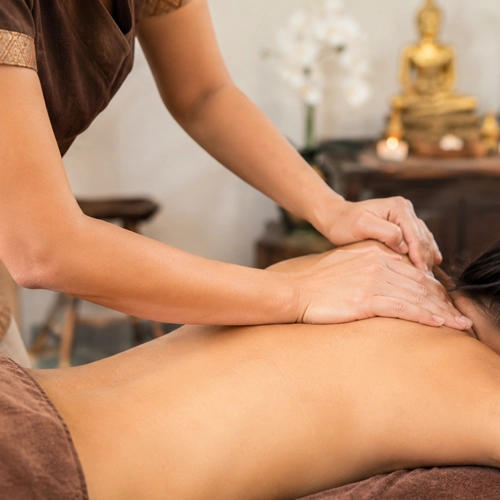
Do your shoulders often feel stiff, does your back stay tense, or does your body struggle to relax after a demanding week? Then the question what does Thai massage do to your body is not just interesting, but practical: you want to know whether a treatment can genuinely support tension relief, stress reduction and recovery.
This guide explains how Thai massage affects muscles, fascia, breathing, mobility and the nervous system. You will learn what to expect realistically, when a treatment may be useful and how to choose a massage at NaSiam in Sint-Job-in-’t-Goor that fits your body.
If you mainly want to find a treatment, location or appointment, go to the central page for Thai massage at NaSiam. This guide deliberately focuses on physical effects and expectations.
Key takeaways
These are the main points if you want a quick understanding of how Thai massage can affect the body.
- Thai massage combines pressure points, rhythmic compression and assisted stretching.
- The treatment may help tense muscles soften and support freer movement.
- The effect is not only muscular; breathing, stress regulation and body awareness also matter.
- Intense does not mean painful; professional adjustment is essential.
- The best choice depends on your goal: relaxation, muscle recovery, mobility or stress relief.
- With medical concerns, acute pain or recent injuries, professional healthcare advice is sensible.
Table of contents
- What does Thai massage do to your body at muscle and fascia level?
- How Thai massage influences your nervous system and stress response
- What happens to mobility, posture and freedom of movement?
- Which massage fits what your body needs?
- Practical tips to get more from your massage
What does Thai massage do to your body at muscle and fascia level?
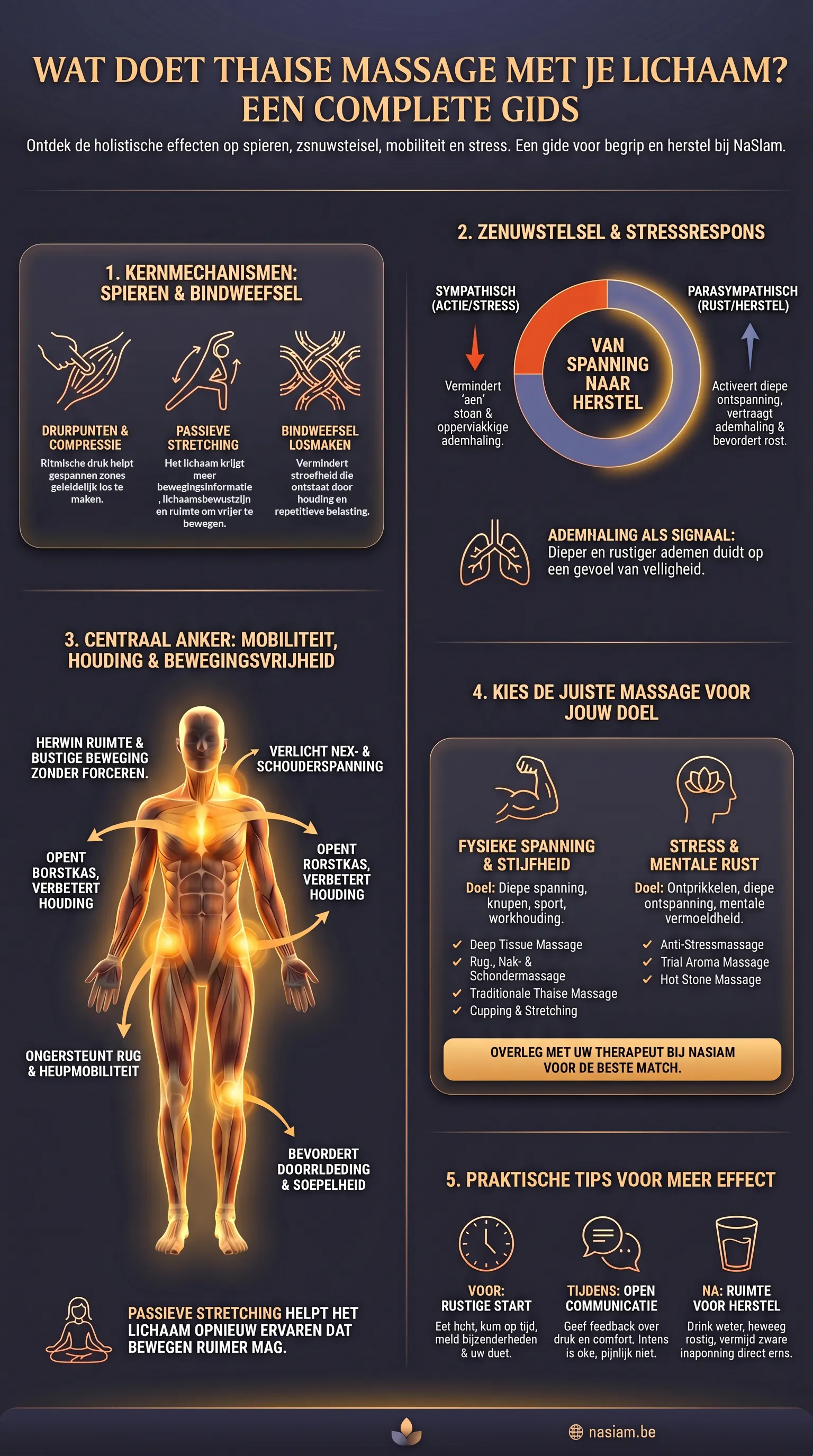
To understand what Thai massage does to the body, start with muscles and fascia. Many complaints people describe as “feeling stuck” come from a mix of tension, posture, repeated load and not enough recovery.
Thai massage is different from a standard relaxation massage. During a traditional Thai massage, the therapist uses rhythmic pressure, stretching and guided mobilisation. The treatment looks at the body as a whole, not only at the area where you feel tension. That matters because neck complaints can be connected to the shoulders, chest, breathing pattern or upper back.
Pressure points and muscle relaxation
Pressure points are used to approach tense areas with precision. The goal is not to push as hard as possible, but to give the tissue time to release tension.
When muscles are tense, the body often protects itself by tightening further. A professional therapist therefore builds pressure gradually. Slow, clear pressure can help a tense muscle resist less. This may create a softer, freer feeling in the shoulders, back, hips or legs.
The National Center for Complementary and Integrative Health describes massage as manipulation of soft tissues and places its possible benefits mainly around pain, tension and wellbeing. That fits what many clients experience: massage is not a medical miracle cure, but it can be a valuable part of self-care and recovery.
Fascia and the feeling of space
Muscles are not the only factor. Fascia around muscles and joints also influences how freely you move. When you sit for long periods, work one-sidedly or hold stress in your body, movement can feel restricted.
Thai massage combines pressure with assisted stretching. This gives the body more movement information. You notice where tension sits, which areas feel limited and where release is easier. That body awareness is often underestimated: it helps you notice earlier when tension starts building again.
How Thai massage influences your nervous system and stress response
Thai massage does not only work mechanically on muscles. A large part of the effect involves the nervous system: the system that determines whether your body reacts with alertness, tension, relaxation or recovery.
Many people from Brecht, Brasschaat, Schilde and the Antwerp region do not visit only for muscle pain. They come because their body stays “switched on”. They sleep more lightly, breathe higher, lift their shoulders or find it difficult to rest. In that situation, professional massage can help guide the body back towards calm.
From tension to recovery mode
When you are under pressure for a long time, the sympathetic nervous system can remain active. That is useful for action, but tiring when it continues for too long.
Massage may support relaxation through touch, rhythm, warmth and breathing. The Mayo Clinic mentions massage as support for stress, tension and pain complaints. Keep expectations realistic: some people respond strongly to massage, while others notice subtler changes. The result depends on your body, stress level, technique and quality of execution.
Breathing as a signal
During a good Thai massage, breathing often changes. People may begin to breathe more deeply or more calmly when the body feels safer.
That is an important signal for the therapist. If you hold your breath, tighten your jaw or pull away from the pressure, the intensity is probably too high. At NaSiam, pressure is adjusted to your response. A treatment may work deeply, but it must remain professional, respectful and controllable.
What happens to mobility, posture and freedom of movement?
Thai massage is especially relevant for people who feel stiff, shortened or limited in movement. Through the combination of pressure and stretching, the body can experience again that movement may become wider and calmer.
This does not mean massage “corrects” your posture as a medical treatment would. It can, however, reduce tension that influences posture. Think of raised shoulders, a tight lower back or hips that feel stiff after sitting for long periods.
Assisted stretching without forcing
With assisted stretching, the therapist carefully moves your body within its natural range. You do not need to perform; you follow the movement and give feedback.
This is valuable for people who rarely stretch or do not know where their limitation is. The stretch is controlled, never a sudden pull. For beginners, that is essential. You can find more background in our guide to your first Thai massage.
Why the whole body matters
A tense neck is rarely only a neck problem. Shoulders, chest, upper back, jaw, breathing and work posture may all play a role.
That is why Thai massage often looks beyond the painful area. During a focused back, neck and shoulder massage, the problem region receives specific attention, but the connection with surrounding muscles still matters. If you experience more general stiffness, a full-body approach may be the better starting point.
The Cleveland Clinic describes massage as possible support for wellbeing, relaxation and pain relief. For NaSiam, the combination is what matters most: skilled hands, clear communication and a treatment that fits your tolerance.
Which massage fits what your body needs?
The question what Thai massage does to your body naturally leads to a second question: which treatment fits your situation? Not every body needs the same level of intensity.
At NaSiam, we do not start from one standard massage. We start from your goal. Do you want to address deep tension, reduce stress, recover after sport or simply relax fully? That nuance determines the best choice.
For physical tension and stiff muscles
When your muscles feel hard, painful or restricted, a targeted treatment is usually more logical than a purely gentle massage. Think of tension caused by desk work, repetitive load, sport or long drives.
Possible choices include:
- deep tissue massage for persistent, deeper muscle tension.
- Back, neck and shoulder massage for local tension caused by posture or stress.
- Cupping & stretching massage when mobility and circulation need extra attention.
- Traditional Thai massage when you want an active, broad treatment.
If you are unsure whether to choose an intensive or gentler treatment, our guide on how to choose the right massage can help.
For stress and mental fatigue
If your body mainly needs calm, depth is not always the best starting point. A gentler treatment can sometimes work better because the nervous system experiences safety more quickly.
For stress, these options often fit well:
- Anti-stress massage for deep mental relaxation.
- Thai aroma massage for a softer oil massage with a calming character.
- hot stone massage when warmth helps tension settle.
If you are visiting from the region and want to plan practically first, you can also check our access and parking information. Lowering practical barriers helps: the calmer you arrive, the easier it is for your body to relax.
For recovery, sport and physical load
After sport or physical load, you are usually not looking for vague relaxation, but for recovery support. The timing matters: immediately after heavy effort requires a different approach than a rest day.
A sport-focused or therapeutic approach can help ease overloaded areas, without making medical claims. With acute pain, swelling, tingling or an unclear injury, healthcare advice remains important. Massage can support recovery, but it does not replace diagnosis.
Practical tips to get more from your massage
The result of Thai massage does not depend only on technique. Your preparation, communication and aftercare also influence how much benefit you get from the session.
Think of massage as cooperation between your body and the therapist. You do not need to perform, but you help by clearly sharing what you feel, where your limits are and what you need afterwards.
Before the massage
A calm start makes the body more receptive. Especially when you arrive after a busy workday, it helps to create a conscious transition.
Practical preparation:
- Avoid a heavy meal just before your appointment.
- Arrive a few minutes early so you do not start in a rush.
- Mention injuries, pregnancy, medication or medical attention points.
- Say clearly whether you want relaxation, recovery or complaint-focused attention.
- Compare options through our overview of massages and treatments if you want to choose in advance.
During the massage
During the treatment, communication is not an interruption; it is a quality requirement. Your feedback helps dose the pressure correctly.
Pay attention to signals such as sharp pain, tingling, dizziness or the feeling that you are holding your breath. Say it immediately. A good therapist adjusts the technique. Intensity can be useful, but forcing often works against the body.
After the massage
After Thai massage, the body can continue responding for hours. That is normal, especially after a deeper treatment.
Give your body room to process the session:
- Drink water and choose gentle movement.
- Do not plan heavy training immediately after a deep massage.
- Expect sensitive areas to feel temporarily tender.
- Notice what improved or stayed sensitive; that helps during a next session.
- Check the price list if you want to plan a follow-up appointment based on treatment and duration.
Want to distinguish ordinary muscle tenderness from a warning sign? Read the focused guide to soreness after a Thai massage.
Experience what Thai massage can do for your body
You can read a lot about what Thai massage does to your body, but the real difference becomes clear when the treatment is professionally adjusted to your body. At NaSiam in Sint-Job-in-’t-Goor, we combine Thai expertise with a calm, hygienic and personal approach.
If you mainly want to address physical tension, choose a targeted traditional Thai massage, deep tissue massage or back, neck and shoulder massage. If you mainly want to decompress and relax, an anti-stress massage or Thai aroma massage will often fit better. Discover all options through our massages and treatments and choose what fits your body.
Frequently asked questions about what Thai massage does to your body
What does Thai massage do to your body?
Thai massage combines pressure points, rhythmic compression and assisted stretching. This can help tense muscles feel softer, support mobility and help the nervous system settle into a calmer state.
Is Thai massage good for stiff muscles?
Often, yes, especially when stiffness is linked to tension, posture, stress or physical load. With sharp pain, recent injuries or medical concerns, it is best to ask a doctor or physiotherapist first.
Why do you sometimes feel tired after Thai massage?
A deeper massage can shift the body into recovery mode. Some people feel light and energised afterwards, while others feel sleepy or heavy. Rest, water and gentle movement usually help.
Should Thai massage hurt?
No. A treatment may feel intense on tense areas, but it should not feel unbearable or sharply painful. Clear communication during the session is essential.
Which Thai massage is best for stress?
For stress, a gentler Thai aroma massage or anti-stress massage is often a good fit. If you also carry a lot of physical tension, a traditional or therapeutic approach may be useful.
How often is Thai massage useful?
That depends on your goal. For general relaxation, an occasional session or maintenance rhythm can be enough. For recurring tension, a more regular short-term plan may be more useful.
When should you avoid deep Thai massage?
With fever, acute inflammation, recent surgery, severe varicose veins, thrombosis risk, unexplained pain or complex medical issues, discuss massage with your healthcare provider first.

Author, reviewer and approver
Nalita Mangtaku
Thai massage therapist, owner & founder
Nalita Mangtaku has practised massage since 2009 and is the founder of NaSiam. Her favourite treatments are therapeutic Thai massage, sports massage, and relaxation massage. She describes her style as flowing, healing, and energetic.
Therapeutic, with clear boundaries
Our massages are non-medical wellbeing treatments adapted to tension, stiffness, fatigue, and the need for relaxation.
- We start with a short intake and adjust pressure, pace, and techniques to your comfort level and situation.
- Massage may support relaxation and temporary body comfort; it does not diagnose conditions or replace a doctor, physiotherapist, or rehabilitation.
- Always mention pregnancy, recent surgery, fever or infection, acute injury or inflammation, skin wounds, blood thinners or a bleeding disorder, and unexplained or increasing pain beforehand.
- Firm massage, deep tissue, and cupping require extra caution; cupping can cause temporary discoloration, scars, burns, or infections.
- Seek medical help for severe or rapidly increasing pain, numbness or weakness, clear swelling, chest pain, or breathing difficulty; do not wait for a massage appointment.
Sources for boundaries and precautions: NCCIH on massage safety, NCCIH on cupping, and ACOG on massage during pregnancy.