
What Are Muscle Knots? Causes, Signs and What Massage Can Do
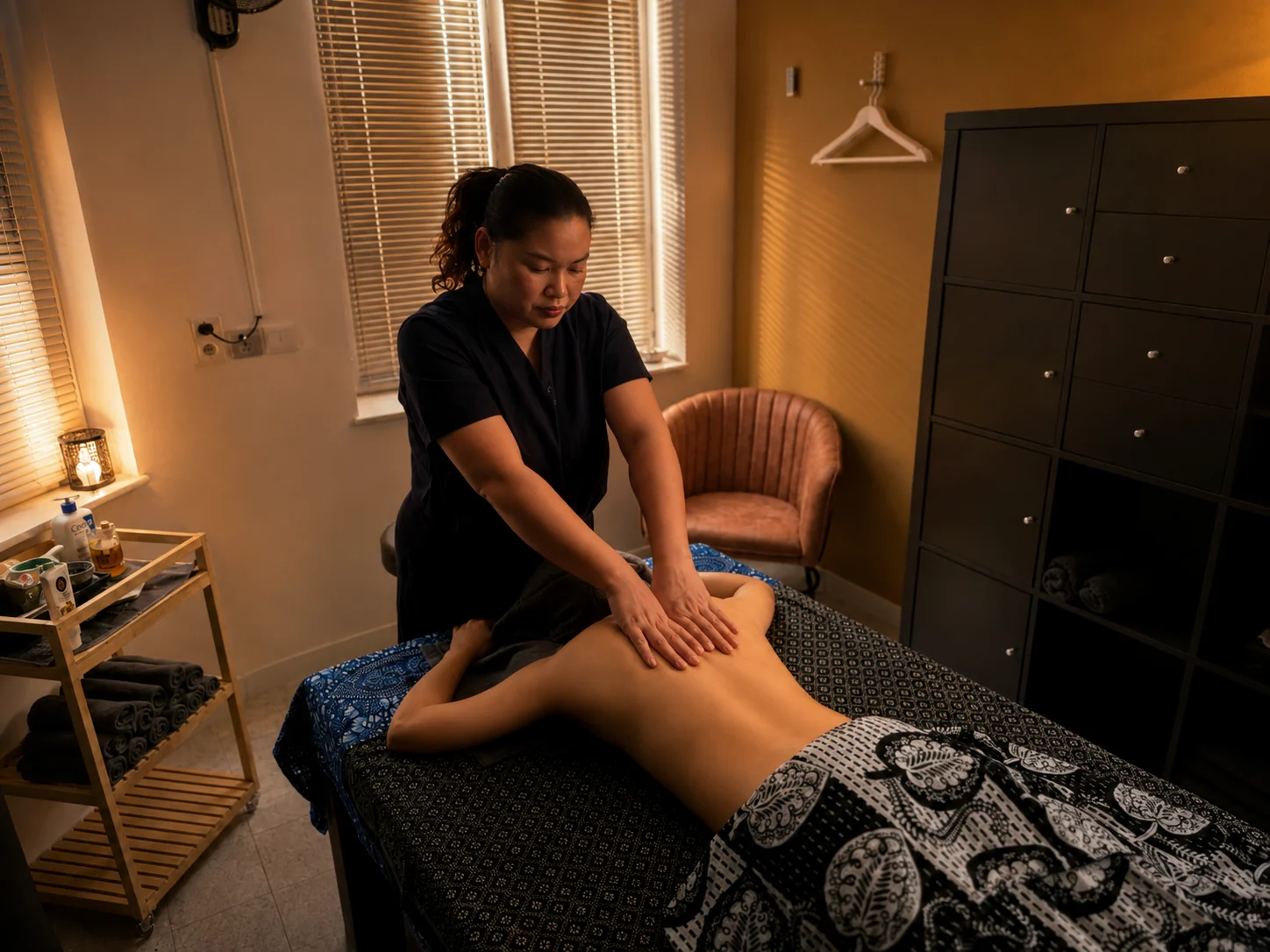
“There is a knot right here.” I hear that often when a client points to their shoulder, neck or back. They usually mean a small area that feels hard, tight or painful. That is what people commonly call a muscle knot.
The spot can be very uncomfortable, but the muscle is not literally tied in a knot. Pushing as hard as possible is not always the answer either. In this article, I explain what may be happening, why the tension can return and when massage may help.
In short
- A muscle knot is a tender or tense area in a muscle.
- Repeated movement, stress, training and not enough recovery time may contribute.
- Massage can make the spot feel calmer and less tender.
- Harder is not automatically better and may irritate a sensitive area.
- A new lump, numbness, weakness or severe pain should be medically assessed.
Contents
- What do people mean by a muscle knot?
- What does a muscle knot feel like?
- Why do muscle knots develop or return?
- Can you massage a muscle knot away?
- What can you safely try yourself?
- Which massage may suit you?
- When should you seek medical advice?
What do people mean by a muscle knot?
It is usually a small area that feels tighter or more tender than the muscle around it. You may notice it when turning your neck, while working or when somebody presses the spot. The neck, shoulders, back and calves are common places.
The professional term that comes closest is trigger point. Even that is not a straightforward diagnosis. Researchers do not always use the same criteria, and there is no test that can say with certainty: this is a trigger point. A systematic review of the diagnostic criteria and a recent scientific review both explain this uncertainty.
The pain is real, but the label “muscle knot” does not yet tell us why it is there. That distinction matters.
What does a muscle knot feel like?
Clients usually describe them as:
- a small spot that feels tight or tender when pressed;
- a dull, aching or tired muscle;
- stiffness after sleeping, working or training;
- familiar pain reproduced by pressing the area;
- pain that sometimes seems to travel to a nearby place;
- movement that suddenly feels less easy or comfortable.
Not every painful spot is a muscle knot. If you can feel an actual lump that is new, growing or remains hard, ask a doctor to look at it first. Do not try to fix it by simply pushing harder.
Why do muscle knots develop or return?
There is rarely one cause. Several things often come together:
- The same movement again and again: for example computer work, lifting or repetitive training.
- Little variation: not because there is one perfect posture, but because the area gets little rest.
- Building too quickly: suddenly training harder or doing much more than usual.
- Stress: many people tense their shoulders or jaw without noticing.
- Too little recovery: poor sleep, few breaks and repeatedly loading the same area.
- An old injury: an area can remain sensitive for longer.
This also explains why the same spot can return. Massage may make it feel better, but the tension can build again when the load remains exactly the same. Massage can do a lot, but it cannot change your desk chair, training or sleep in one session.
Can you massage a muscle knot away?
Massage may make the spot less tender and movement more comfortable. Targeted pressure, gentle movement and a chance for the body to relax can all help.
I also tell clients honestly that I cannot literally push a knot out of a muscle. Trigger point research looks at several possible explanations. The muscle itself is one part of the story. The nervous system also affects how we feel tension and pain. A scientific review of trigger points discusses these different models.
Since I started practising massage in 2009, one lesson has stood out: more pressure does not automatically mean a better massage. A firm massage may suit you, but the pressure must remain manageable. Sharp, electric or intolerable pain is not proof that a treatment is working.
One session may already make a clear difference. At other times, you may need more than one session, or massage may simply not be the right option. The National Center for Complementary and Integrative Health rightly advises people not to delay medical care because of massage.
What can you safely try yourself?
For familiar muscle tension without warning signs, you can try a few simple things:
- Move regularly. A short walk or a few gentle shoulder rolls may be enough.
- Build exercise gradually. If the spot reacts after every workout, take a temporary step back.
- Try warmth. A warm shower or heat pad may feel good if your body responds well to it.
- Do not press as hard as possible. A massage ball can feel noticeable, but it should not cause sharp pain.
- Look for a pattern. Does it happen after work, sport or during a stressful period? That pattern often tells you more than the spot alone.
Do not firmly self-treat a swelling, a hot red area, a place with reduced sensation or a recent injury.
Which massage may suit you?
If the tension feels deep and has been present for a while, deep tissue massage may suit you. If it is mainly in the upper back, neck and shoulders, a back, neck and shoulder massage is often the more direct choice.
I do not begin by pressing as hard as I can. First, I want to know where you feel the problem, when it appears and whether the pain stays in one place. Old injuries, medication and your previous experience with massage also matter. We then build the pressure gradually, and you can tell me what feels right throughout the session.
Not sure? Read how to choose the right massage or compare all massages and treatments. An unclear or medical symptom belongs with a doctor or physiotherapist first, not on the massage table.
When should you seek medical advice?
Sometimes something looks like a muscle knot while more is going on. Mayo Clinic recommends medical attention for severe muscle pain after an injury, signs of infection and symptoms that persist.
Have the area assessed if you notice:
- a new, growing, hard or unexplained lump;
- severe pain or pain that is rapidly worsening;
- marked swelling, redness, warmth or fever;
- new tingling, numbness or weakness;
- symptoms following a fall, accident or other serious injury;
- pain that does not improve or repeatedly returns without a clear reason.
Seek urgent medical help for shortness of breath, chest pain, fainting, extreme muscle weakness or sudden neurological symptoms.
How I work at NaSiam
When you come to NaSiam with a painful, tense spot, I listen to your story first. Then we look at what may suit you. Sometimes that means deep and targeted work. Sometimes your body responds better to a calmer massage.
I do not promise that every “muscle knot” will disappear after one appointment. What I can do is adapt the massage to what I feel and to what you tell me. View our treatments or book your appointment when massage is appropriate for your situation.
This guide provides general information and does not replace medical diagnosis or treatment.
Frequently asked questions
What are muscle knots?
People usually use the term muscle knot for a small area in a muscle that feels hard, tight or tender. It is a familiar description, not a precise medical diagnosis.
What does a muscle knot feel like?
It often feels like a tender spot in one area, stiffness or familiar pain with movement or touch. The pain may sometimes be felt elsewhere. Not every lump or painful spot is a muscle knot.
Can massage remove a muscle knot?
Massage may make the area less tender and movement more comfortable. One treatment cannot guarantee that the symptom will stay away for good.
Why do muscle knots come back?
The cause often remains. Repeated movement at work, little variation, building training too quickly, stress and poor recovery may all contribute.
Which massage suits muscle knots?
Deep tissue massage or a back, neck and shoulder massage may suit familiar tension. The pressure depends on the area, your sensitivity and what feels right for you.
Are muscle knots the same as trigger points?
The terms are often used interchangeably. Trigger point is a technical term, while muscle knot is the everyday phrase people use for a painful, tense spot.
When should a painful spot be medically assessed?
Seek advice for a new unexplained lump, severe or worsening pain, swelling, redness, fever, numbness, weakness, symptoms after a serious injury or pain that does not improve.

Author, reviewer and approver
Nalita Mangtaku
Thai massage therapist, owner & founder
Nalita Mangtaku has practised massage since 2009 and is the founder of NaSiam. Her favourite treatments are therapeutic Thai massage, sports massage, and relaxation massage. She describes her style as flowing, healing, and energetic.
Therapeutic, with clear boundaries
Our massages are non-medical wellbeing treatments adapted to tension, stiffness, fatigue, and the need for relaxation.
- We start with a short intake and adjust pressure, pace, and techniques to your comfort level and situation.
- Massage may support relaxation and temporary body comfort; it does not diagnose conditions or replace a doctor, physiotherapist, or rehabilitation.
- Always mention pregnancy, recent surgery, fever or infection, acute injury or inflammation, skin wounds, blood thinners or a bleeding disorder, and unexplained or increasing pain beforehand.
- Firm massage, deep tissue, and cupping require extra caution; cupping can cause temporary discoloration, scars, burns, or infections.
- Seek medical help for severe or rapidly increasing pain, numbness or weakness, clear swelling, chest pain, or breathing difficulty; do not wait for a massage appointment.
Sources for boundaries and precautions: NCCIH on massage safety, NCCIH on cupping, and ACOG on massage during pregnancy.