
Thai massage links: key information about Thai massage
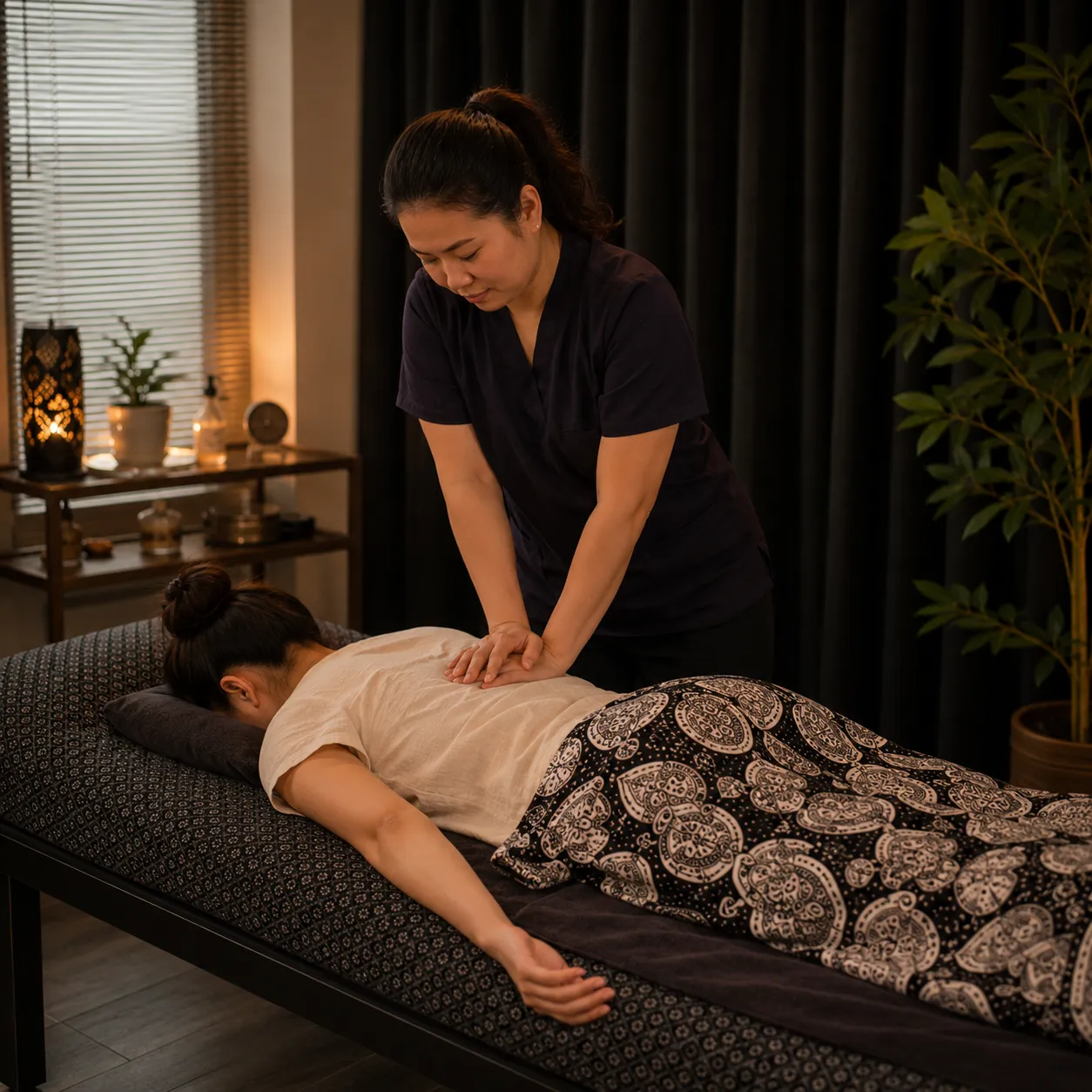
When you search online for Thai massage links, you often find a mix of short salon pages, general wellness articles, and loose sources that do not make it clear where to start. If you simply want to understand what Thai massage is, which effects are realistic, and how to recognize a reliable treatment, that can be confusing.
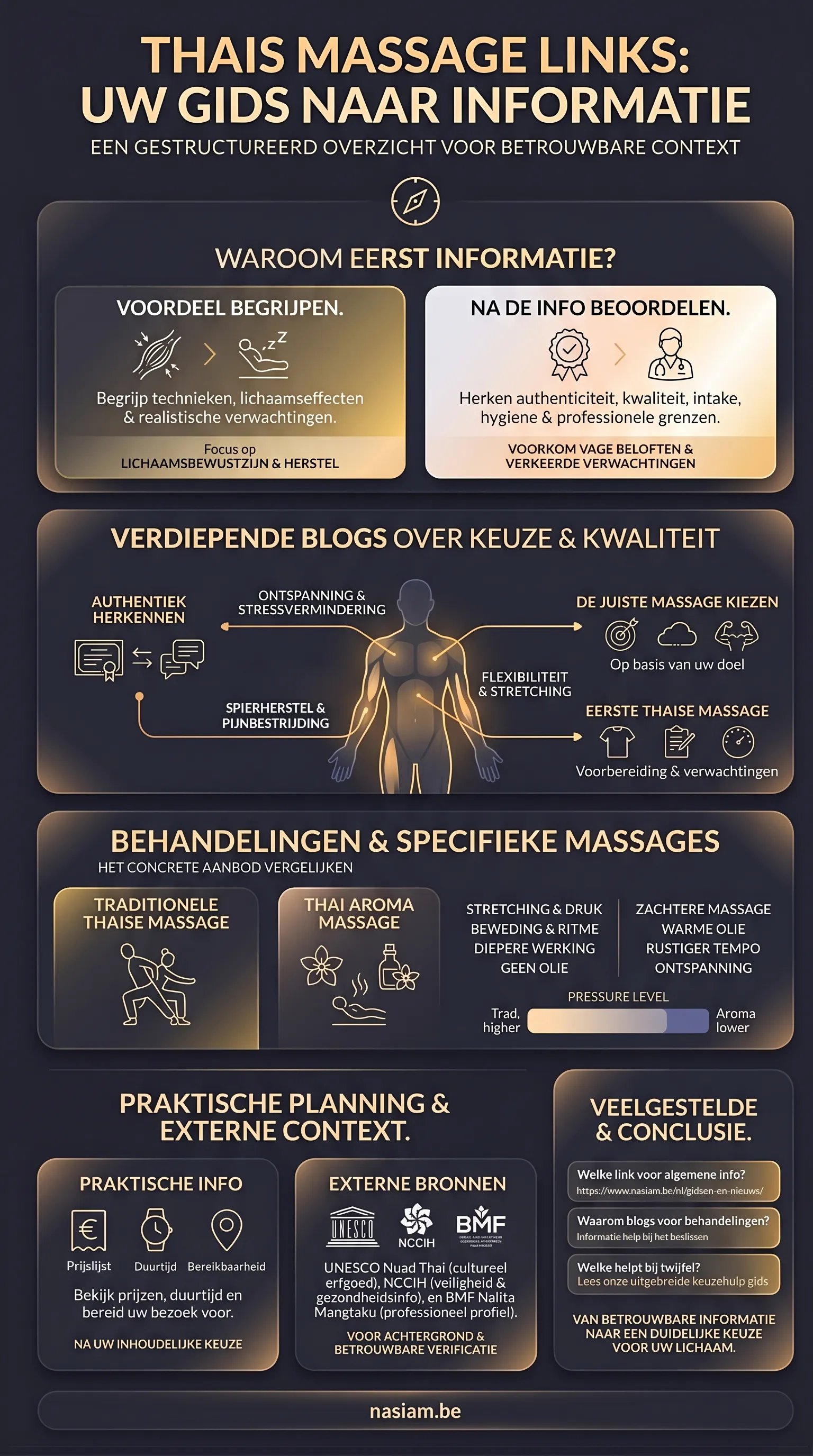
That is why this page first brings together the most important NaSiam articles that explain Thai massage. Only after that do we point to treatment pages, specific massage types, and practical planning information. The route is simple: understand first, compare next, and then choose if it feels right.
Key points
This summary helps you quickly decide which source best fits your question.
- Start with informative articles if you want to understand what Thai massage is and how it may affect the body.
- Use choice guides when you are unsure between relaxation, stretching, muscle recovery, or a more focused treatment.
- Look at the treatment overview and specific massage pages only after that.
- External sources are most useful for cultural background, safety, and professional context.
- This page is built as an information hub for readers looking for reliable context about Thai massage.
Table of contents
- Thai massage links: start with massage information
- Deeper articles for choice, quality, and a first visit
- After that: treatments and specific massages
- Reliable external sources about Thai massage
- How to use massage links without comparing the wrong things
Thai massage links: start with massage information
People looking for information about Thai massage usually do not need a price list or booking page first. They need context: what happens during a treatment, which techniques often return, what can and cannot be expected, and when it is wise to be cautious.
What does Thai massage do to your body?
A strong first starting point is our guide what does Thai massage do to your body. It explains how pressure, stretching, rest, and body awareness can work together. The article is especially useful when you want clear answers to questions such as: why does my body feel looser after massage, why is communication about pressure important, and when should I have complaints assessed medically?
This guide does not only name a treatment, but also gives context: muscles, tension, stress, recovery, and boundaries. That makes the information more useful than a short commercial description.
Which benefits are realistic?
If you want a broader understanding of why people choose Thai massage, continue with benefits of Thai massage. That article brings together common reasons: relaxation, improved body awareness, support with stiffness, mental calm, and a better sense of recovery.
It is important that benefits are not presented as medical guarantees. A professional massage can be supportive, but every body responds differently. That nuance makes a source stronger for people looking for reliable information.
Deeper articles for choice, quality, and a first visit
After the basic information, the next question usually becomes more practical: how do you recognize quality, which treatment fits your situation, and what can you expect during a first appointment? These links help you take that step without immediately ending up in a booking flow.
Recognizing authenticity and quality
Not every page that uses “Thai massage” clearly explains what the treatment involves. That is why how to recognize authentic Thai massage is an important deeper resource. The guide explains why intake, training, technique, hygiene, communication, and professional boundaries matter more than decoration or big words.
This is especially useful for readers who want to compare based on substance. A reliable practice makes clear who treats you, how the treatment is adjusted, and what massage can or cannot mean for your body. Those are stronger quality indicators than slogans or vague promises.
Choosing the right massage
If you still hesitate between different forms after reading the explanation, the guide choosing the right massage is the best next read. It starts from the visitor’s goal: calm, stress relief, a stiff neck, muscle knots, sports recovery, warmth, or a softer treatment.
For readers, this is a useful bridge between theory and practice. You do not need to know the exact treatment yet. By first defining your goal, it becomes clearer whether you are moving toward relaxation, traditional Thai massage, Thai aroma, deep tissue, or another approach.
Preparing for your first Thai massage
A first appointment often raises practical questions: what should you wear, how does the intake work, how firm may the pressure be, and what should you do if something feels uncomfortable? The guide first Thai massage: everything you need to know answers those questions.
This resource is especially valuable for people who have no experience with Thai massage yet. It lowers the threshold by making expectations clear, without making the treatment feel bigger or more complicated than it needs to be.
After that: treatments and specific massages
Only when the basics are clear does it make sense to look at the actual offer. Then you use the service pages not as isolated sales pages, but as a concrete next step after information and choice context.
Overview of massages and treatments
The general overview of massages and treatments is the best place to see the different options side by side. It shows the broad structure of the offer, from gentle relaxation to more focused treatments.
If you are mainly looking for the classic Thai foundation, you can continue to traditional Thai massage. This treatment is closest to the well-known Thai combination of pressure, rhythm, mobilization, and stretching.
Comparing specific massage types
If you want a softer massage with oil and a calmer pace, Thai aroma massage is a logical next step. If you are dealing with stubborn muscle knots or deeper tension, deep tissue massage may fit better.
This order is deliberate. First you understand what Thai massage is and how to assess quality. Only then do you compare specific treatments. That makes the choice less dependent on a name on the menu and more dependent on what your body needs.
Practical planning
When you want to plan a treatment concretely, price, duration, and accessibility become relevant. The price list and practical accessibility information then help you prepare your visit calmly. That step works best after the content-based choice, not before it.
Reliable external sources about Thai massage
External links are useful when they provide neutral context beyond a practice website. Think of cultural recognition, general safety information, and professional verification. Use these sources as background, not as a replacement for a personal intake.
Cultural and content background
For the origins of traditional Thai massage, the UNESCO page on Nuad Thai, traditional Thai massage is a strong source. UNESCO places Nuad Thai within the art, science, and culture of traditional Thai healthcare. That helps you understand Thai massage as more than a general wellness treatment.
That context is valuable, but it does not automatically say anything about the quality of every individual session. That is why it remains sensible to look at training, communication, intake, and realistic expectations alongside heritage context.
Safety and realistic expectations
For general health information, the National Center for Complementary and Integrative Health page on massage therapy is useful. That source emphasizes, among other things, that medical circumstances and contraindications should be discussed beforehand.
That fits a professional approach to massage. Massage can support relaxation and body awareness, but it is not a replacement for medical care when complaints are serious, sudden, or unclear.
Professional context
If you want background on the therapist herself, you can consult the professional profile of Nalita Mangtaku at the Belgian Massage Federation . It gives extra context about professional membership and makes the information around NaSiam easier to verify.
How to use massage links without comparing the wrong things
Links are useful only when you know which question you are trying to answer. If you immediately compare prices, treatments, and general articles all at once, the overview disappears quickly. A better order is: understand, assess, choose, and only then plan practically.
Content first, treatment second
Start with the question you want answered. If you are looking for an explanation of the body’s response, start with the informative articles. If you are looking for quality criteria, read about authenticity and intake. If you hesitate between massage types, use the choice guide.
Only after that does it make sense to select a treatment. You then compare not only by name or price, but by goal, intensity, and expectation. That usually leads to a better choice.
Pay attention to nuance and source quality
Be critical of pages that promise quick healing, guaranteed results, or extreme benefits. A reliable source uses nuance, names limits, and encourages you to take medical complaints seriously.
A good overview of Thai massage therefore does not only list benefits. It also explains that the right treatment depends on your goal, body, experience, contraindications, and communication during the session.
From information to a clear choice
Use this page as a route map. Start with the informative articles about Thai massage, then read the choice and quality guides, and only after that go to the treatment overview and specific massage pages. That way, Thai massage links become more than a loose collection of search results: they become a structured source for anyone genuinely looking for information.
Frequently asked questions about Thai massage links
Which Thai massage links give general information first?
Start with the NaSiam articles about what Thai massage does to your body, the benefits of Thai massage, how to recognize authentic Thai massage, and the guide for a first Thai massage.
Why are informative blog articles listed before the treatments?
Because many visitors first need context: what Thai massage is, when it may be useful, how to recognize quality, and which expectations are realistic.
Which link helps if you do not yet know which massage fits?
Read the guide on choosing the right massage. It starts from your goal, such as relaxation, muscle recovery, stress relief, or a focused treatment.
Which page should you use to compare treatments?
After the informative articles, the massages and treatments overview is the best next step. From there, you can continue to specific treatments such as traditional Thai massage or Thai aroma massage.
Are external Thai massage links always reliable?
Not automatically. Prefer neutral sources such as heritage institutions, health organizations, or professional associations, and be critical of strong medical claims.
How should you use this page when looking for information about Thai massage?
Start with the explanatory articles, then read the choice and quality guides, and only then compare treatments and practical information.
About the author
Pieter-Jan Casteels
Website, business data and analytics lead at NaSiam
Pieter-Jan Casteels is responsible for NaSiam's website, business data, and analytics. He checks internal figures and clearly separates first-party data from external sources.

Reviewed and approved by
Nalita Mangtaku
Thai massage therapist, owner & founder
Nalita Mangtaku has practised massage since 2009 and is the founder of NaSiam. Her favourite treatments are therapeutic Thai massage, sports massage, and relaxation massage. She describes her style as flowing, healing, and energetic.
Therapeutic, with clear boundaries
Our massages are non-medical wellbeing treatments adapted to tension, stiffness, fatigue, and the need for relaxation.
- We start with a short intake and adjust pressure, pace, and techniques to your comfort level and situation.
- Massage may support relaxation and temporary body comfort; it does not diagnose conditions or replace a doctor, physiotherapist, or rehabilitation.
- Always mention pregnancy, recent surgery, fever or infection, acute injury or inflammation, skin wounds, blood thinners or a bleeding disorder, and unexplained or increasing pain beforehand.
- Firm massage, deep tissue, and cupping require extra caution; cupping can cause temporary discoloration, scars, burns, or infections.
- Seek medical help for severe or rapidly increasing pain, numbness or weakness, clear swelling, chest pain, or breathing difficulty; do not wait for a massage appointment.
Sources for boundaries and precautions: NCCIH on massage safety, NCCIH on cupping, and ACOG on massage during pregnancy.