
Foot massage during pregnancy: what is safe?
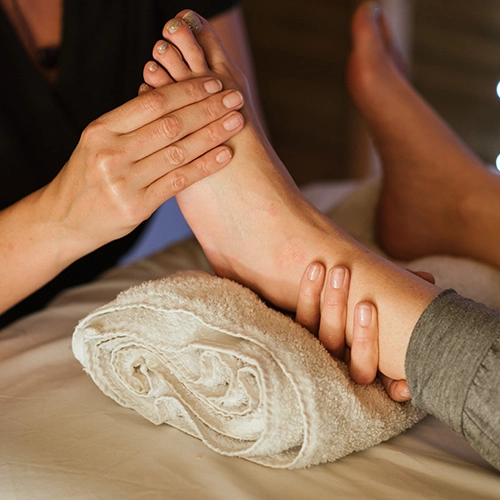
Tired feet, tighter shoes, and heavy-feeling legs are common concerns during pregnancy. A gentle foot massage during pregnancy may then provide a welcome rest. However, not every type of swelling is suitable for massage, and a wellbeing treatment cannot address a medical cause.
This guide explains what you can realistically expect from foot massage, how a professional session is adapted, and when your midwife, doctor, or maternity team should come first. If you want to book a complete adapted treatment, visit the NaSiam pregnancy massage.
Key points
- A gentle foot massage may feel comfortable and relaxing, but it does not treat fluid retention or a pregnancy complication.
- Always mention pregnancy, medical monitoring, pain, varicose veins, previous thrombosis, and pronounced swelling before treatment.
- Sudden, severe, or one-sided swelling requires medical assessment rather than a wait-and-see massage.
- A tender reflex zone is not a diagnostic test, and NaSiam does not promise that a specific foot point can start labour.
- NaSiam offers pregnancy massage from the second trimester as its own practice policy.
Why can your feet feel different during pregnancy?
Pregnancy changes the load on the feet, ankles, legs, hips, and back. Body weight and posture change, you may become tired more quickly, and long periods of standing or warm weather can make heaviness more noticeable. Gradual swelling of the feet and ankles is also common, particularly later in the day and later in pregnancy.
That does not make every type of swelling harmless. NHS guidance on swollen feet during pregnancy warns that a sudden increase in swelling can be associated with pre-eclampsia. Medical assessment should be the first step when those warning signs appear. Our separate guide to swollen feet during pregnancy sets out the main distinctions.
What can a gentle foot massage do?
A foot massage gives you time to sit or lie down, take weight off your feet, and focus on what feels comfortable. Calm strokes, light kneading, and gentle pressure may feel pleasant when the feet are tired. Some people temporarily feel more relaxed or lighter afterwards. That remains an individual experience rather than a guaranteed physical result.
At NaSiam, foot comfort is therefore the practical aim. We do not promise that massage drains fluid, improves circulation, prevents varicose veins, changes hormones, or cures a pregnancy symptom. Those claims go beyond what a wellbeing treatment can responsibly promise.
Foot massage is not treatment for oedema
The word oedema describes fluid accumulation, but it does not explain its cause. A massage therapist cannot establish that cause. Massage must never delay antenatal or medical assessment. If a healthcare professional recommends examination, rest, movement, compression, or another approach, that advice takes priority.
When should massage not be your first step?
Contact an appropriate healthcare professional before massage if you have:
- sudden or rapidly increasing swelling;
- swelling that is clearly present on only one leg or foot;
- a warm, red, painful, or tender lower leg;
- a severe headache, visual problems, pain below the ribs, or feeling distinctly unwell;
- bleeding, leaking fluid, fever, or an active infection;
- breathlessness, chest pain, or sudden dizziness;
- a known high-risk pregnancy or medical complication.
One-sided swelling combined with warmth and pain can be a reason to rule out a blood clot. Chest pain or breathing difficulty requires urgent care. Do not use a massage appointment to test whether these symptoms disappear on their own.
How is foot massage adapted during pregnancy?
An adapted treatment begins before the first touch. The therapist asks how far along you are, how the pregnancy is progressing, whether you receive medical monitoring, and which position feels comfortable. At NaSiam, pregnancy is always discussed beforehand, even when it is not yet visibly apparent.
Supported positioning
Your feet and legs are supported in a stable position. During a complete pregnancy massage, NaSiam mainly works in side-lying with cushions. The American College of Obstetricians and Gynecologists identifies side-lying as a suitable massage position during pregnancy. For a separate foot treatment, a comfortable seated or semi-reclined position may be appropriate as long as you continue to feel well.
Gentle, controllable pressure
Pressure is introduced gradually and remains adjustable. Massage does not need to be hard to feel attentive and complete. Sharp, burning, electrical, or increasing pain is not evidence that treatment is working; it is a reason to ask for less pressure or stop immediately.
Simple oil without pregnancy promises
A neutral oil or balm can help the hands move smoothly. Mention allergies, skin sensitivity, and fragrance sensitivity first. NaSiam avoids claims that a particular essential oil treats a pregnancy symptom or affects labour. When in doubt, we keep the approach simple or avoid oil on the sensitive area.
Foot massage and reflexology during pregnancy
An ordinary foot massage mainly uses strokes, kneading, and general pressure for comfort across the feet and lower legs. Reflexology-inspired massage applies more focused pressure to zones on a traditional foot map. The proposed connection between such a zone and a particular organ has not been convincingly established.
A sensitive place on the foot is therefore not a test result. It may feel tender because of load, skin, footwear, local pressure, or individual sensitivity. NaSiam uses reflexology elements as variation within a relaxing treatment, not to diagnose a condition or assess a pregnancy. Read foot massage or reflexology-inspired massage for the full comparison.
Can pressure on a foot point induce labour?
Online sources often claim that a particular acupressure or reflex point stimulates the uterus. NaSiam does not make that promise and does not use foot massage to start labour. Questions about inducing labour or preparing for birth belong with the midwife, obstetrician, or doctor responsible for your maternity care.
First, second, and third trimester
No single week makes every massage automatically safe or unsafe. Practices may, however, use their own precautionary policy. NaSiam does not provide pregnancy massage during the first trimester and starts from the second trimester after a short intake.
Adaptation remains necessary later in pregnancy. Your energy, position, abdominal size, blood pressure, medical monitoring, and symptoms may change. A treatment that felt comfortable several weeks ago may now require different support or a shorter duration. Mention changes again at every appointment.
Giving your feet simple comfort at home
For ordinary tiredness without warning signs, simple measures may feel pleasant:
- wear shoes and socks that do not pinch;
- alternate long periods of standing with sitting and calm movement;
- rest with your feet comfortably raised if that feels good;
- move your ankles and feet in line with your care provider’s advice;
- use a lukewarm rather than hot foot bath if heat is suitable for you;
- stop self-massage if an area is painful, red, warm, or markedly swollen.
These suggestions do not replace individual advice. If you have high blood pressure, a history of thrombosis, painful varicose veins, or other medical risk factors, coordination with your maternity care professional matters more than a general online routine.
A professional appointment at NaSiam
If you want a calm, full treatment during pregnancy, choose the pregnancy massage rather than automatically booking a general foot-reflexology session. Positioning, pressure, and duration are then planned within a pregnancy-specific framework from the beginning.
If you only want your feet treated, mention when booking that you are pregnant and how far along you are. This allows us to check which appointment fits the service and your circumstances. You can also review current prices and access and parking.
Frequently asked questions about foot massage during pregnancy
Is foot massage safe during pregnancy?
A gentle foot massage may be comfortable for many pregnant people when positioning, pressure, and personal circumstances are discussed. Always mention pregnancy. Consult your maternity care professional first if there are complications, risk factors, or uncertainty.
Can foot massage treat swollen feet?
No. Massage does not treat the cause of swelling. Sudden, severe, or one-sided swelling, or swelling with headache, visual problems, pain below the ribs, or feeling unwell, needs prompt medical assessment.
Does NaSiam offer foot massage during the first trimester?
NaSiam does not offer pregnancy massage during the first trimester as its own precautionary policy. This is a practice decision, not a universal medical rule.
Which duration should I choose?
There is no mandatory duration or frequency. Choose according to comfort and discuss changes during the intake. Longer and more frequent is not automatically better.
Where do I book the adapted treatment?
Visit pregnancy massage from the second trimester for current durations, prices, positioning, and the booking button.
Conclusion
Foot massage during pregnancy can provide a carefully supported rest when pressure, position, and personal circumstances are adapted. It does not diagnose a condition, remove medical swelling, or replace antenatal care. Warning signs and uncertainty always place medical assessment before massage.

Author, reviewer and approver
Nalita Mangtaku
Thai massage therapist, owner & founder
Nalita Mangtaku has practised massage since 2009 and is the founder of NaSiam. Her favourite treatments are therapeutic Thai massage, sports massage, and relaxation massage. She describes her style as flowing, healing, and energetic.
Therapeutic, with clear boundaries
Our massages are non-medical wellbeing treatments adapted to tension, stiffness, fatigue, and the need for relaxation.
- We start with a short intake and adjust pressure, pace, and techniques to your comfort level and situation.
- Massage may support relaxation and temporary body comfort; it does not diagnose conditions or replace a doctor, physiotherapist, or rehabilitation.
- Always mention pregnancy, recent surgery, fever or infection, acute injury or inflammation, skin wounds, blood thinners or a bleeding disorder, and unexplained or increasing pain beforehand.
- Firm massage, deep tissue, and cupping require extra caution; cupping can cause temporary discoloration, scars, burns, or infections.
- Seek medical help for severe or rapidly increasing pain, numbness or weakness, clear swelling, chest pain, or breathing difficulty; do not wait for a massage appointment.
Sources for boundaries and precautions: NCCIH on massage safety, NCCIH on cupping, and ACOG on massage during pregnancy.
- Pregnancy
- Massage
- Health