
Foot massage or reflexology-inspired massage: which suits you?
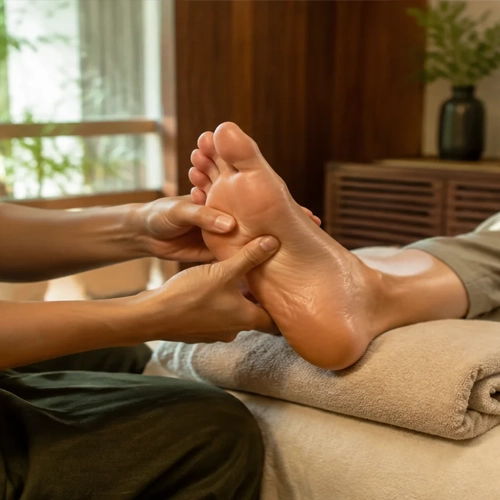
Your feet may feel tired after a long working day, a walk, or hours spent standing. A foot treatment then seems like a natural choice, but what are you actually booking: a foot massage or reflexology-inspired massage? Both focus on the feet and lower legs, yet the techniques and the explanations behind them are not quite the same.
This guide explains the difference, what treatment at NaSiam in Sint-Job-in-’t-Goor involves, and which expectations are realistic. It also covers situations that require caution. You can then choose according to comfort, preference, and clear information rather than broad health promises.
Key points
This summary highlights the factors that matter most when choosing a foot treatment.
- Foot massage uses calm strokes, kneading, and pressure for comfort and relaxation.
- Reflexology-inspired massage applies more targeted pressure to zones described in traditional reflexology maps.
- The proposed connection between specific foot zones and organs has not been convincingly proven by scientific research.
- At NaSiam, the treatment is a carefully delivered, reflexology-inspired wellbeing service, not diagnosis or medical therapy.
- Pressure is adapted to your feedback; tenderness is not a test for a problem elsewhere in the body.
- Mention pain, swelling, wounds, skin problems, pregnancy, and relevant medical information before treatment.
Contents
- What is a regular foot massage?
- What do we mean by reflexology-inspired massage?
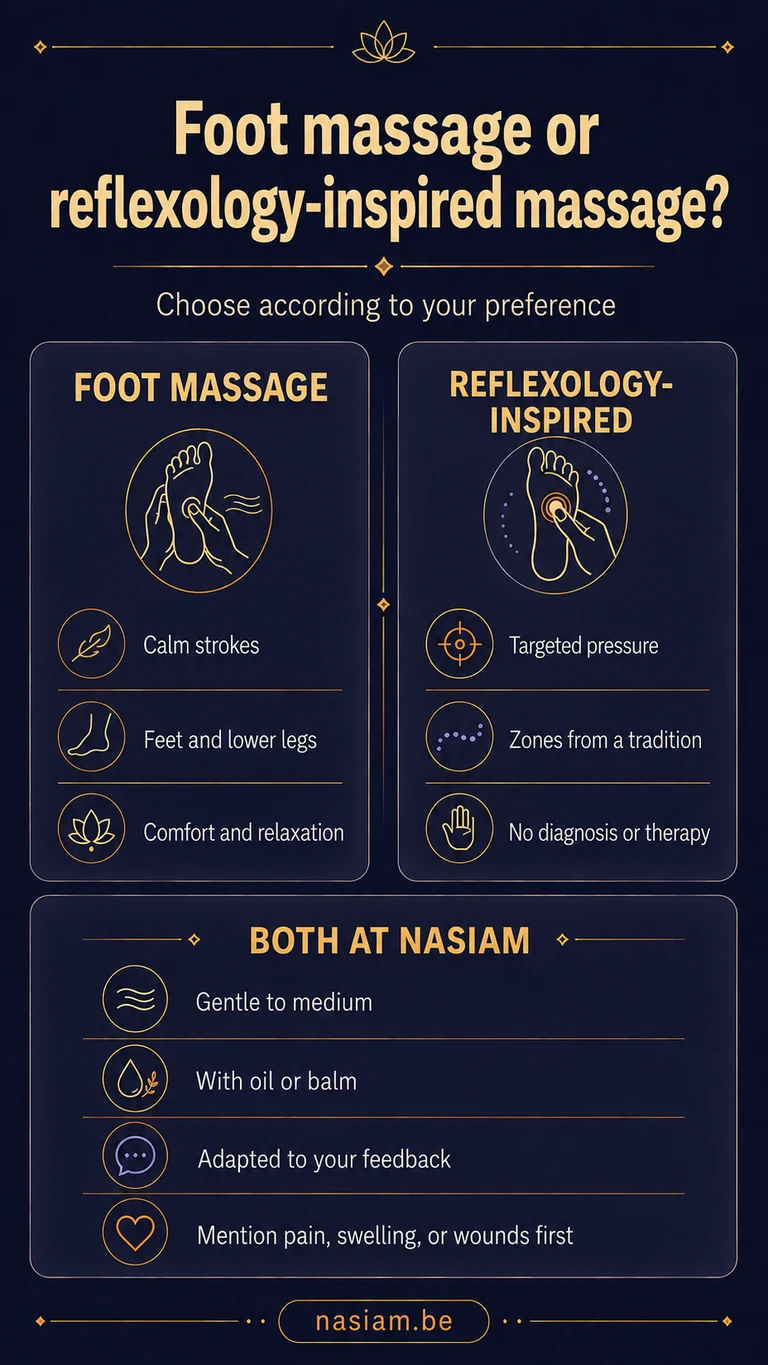
- Foot massage or reflexology: the differences
- Who might choose a foot treatment?
- What happens during a session at NaSiam?
What is a regular foot massage?
A regular foot massage starts with what you can directly experience: tired feet, a need to unwind, or a preference for treating a smaller area of the body. The practitioner uses their hands to work across the feet and usually the lower legs with calm, flowing techniques.
Strokes, gentle kneading, and local pressure can be combined during the session. Oil or balm helps the hands move smoothly across the skin. Pressure does not have to be hard to feel worthwhile; a lighter approach may be the better fit for sensitive feet.
Comfort is the practical goal
A relaxing foot massage does not need a complicated theory. Its purpose is a cared-for experience during which your feet no longer need to stand, walk, or carry you. Some people choose it after a demanding week, while others find that a defined foot treatment feels more approachable than a full-body massage on their first visit.
Your feet do not need to be painful. Treatment can simply provide a quiet pause. If you do have persistent pain or a problem that affects your walking, seek appropriate assessment first; a massage practitioner does not replace a doctor, podiatrist, or physiotherapist.
What do we mean by reflexology-inspired massage?
Foot reflexology applies pressure to selected areas of the feet. Reflexology traditions associate these zones with other parts of the body. That is a traditional explanation, not an anatomical map a practitioner can use to identify an illness.
The US National Center for Complementary and Integrative Health describes reflexology as applying pressure to specific points on the feet or hands and notes that the proposed healing connections to other body parts have not been proven. This distinction protects you from exaggerated expectations.
Inspired by reflexology, without diagnostic claims
At NaSiam, we use elements of that pressure-point tradition within a relaxing foot treatment. Attention remains on your feet, lower legs, comfort, and feedback throughout the session. We do not use a tender point to draw conclusions about an organ, health condition, or supposed blockage.
That does not make the experience impersonal. Targeted pressure can feel distinct and adds variation to the massage. The explanation simply remains honest: treatment supports a sense of care and relaxation but does not replace examination, diagnosis, or medical treatment.
Foot massage or reflexology: the differences
The terms are often used interchangeably online. This comparison helps you focus on the actual experience rather than the name alone.
| Aspect | Foot massage | Reflexology-inspired foot massage |
|---|---|---|
| Main technique | Strokes, kneading, and general pressure | More targeted pressure on traditional foot zones |
| Area | Feet and usually the lower legs | Feet and lower legs, with extra attention to selected points |
| Practical purpose | Comfort and general relaxation | Comfort, relaxation, and a more targeted pressure experience |
| Explanation | Starts with muscles, skin, joints, and your experience | Uses a traditional zone map without treating it as a diagnostic model |
| Pressure | Gentle to medium, adapted to your preference | Gentle to medium, with more distinct pressure in selected areas |
| Medical role | Not medical treatment | No diagnosis or treatment of organs or health conditions |
A tender point is not a test result
An area on the sole may be tender because of pressure, load, skin irritation, or normal individual sensitivity. The response does not prove that an organ assigned to that point on a reflexology map has a problem. One sensitive area therefore need not make you anxious.
You should still explain what you feel. Sharp, burning, or increasing pain is not the purpose of treatment. Clear communication allows the pressure, technique, or position to be changed immediately. If you want to compare full-body options too, use our guide to choosing the right massage.
Who might choose a foot treatment?
A foot treatment is most suitable when the area and calm character match your preference. You do not need to believe in reflexology claims to enjoy a carefully delivered foot massage.
It may be a logical choice if you:
- stand or walk a great deal and want to give your feet a rest;
- prefer starting with a defined treatment rather than full-body massage;
- favour gentle to medium intensity;
- want relaxation without firm work across your back or shoulders;
- appreciate focused attention on the feet and lower legs.
When discussion should come first
Not every foot should be massaged straight away. Mention open wounds, an active fungal or skin infection, marked swelling, a recent fracture or sprain, severe unexplained pain, reduced sensation, and circulation problems beforehand. Seek medical help first for a suspected blood clot, a suddenly red and swollen leg, or another acute concern.
The NCCIH overview of massage safety advises against using massage to delay medical assessment and recommends discussing health conditions with both your healthcare provider and practitioner. Medication that makes bleeding or bruising more likely may also mean the treatment needs adapting or medical advice should come first.
Always mention pregnancy. Our separate guide to foot massage during pregnancy explores that context in more detail. If swelling is visible, also read when swollen feet during pregnancy need medical assessment. When there are complications or uncertainty, advice from your doctor or midwife takes priority; NaSiam does not claim that pressure on the feet can induce labour.
What happens during a session at NaSiam?
Clear preparation lowers the threshold for a first appointment. At NaSiam in Sint-Job-in-’t-Goor, we begin by discussing what feels comfortable, why you chose a foot treatment, and whether there are any relevant considerations.
You only need to remove your shoes and socks. The rest of your body remains clothed and comfortably supported. Treatment focuses on the feet and lower legs and uses oil or balm. Pressure is adjusted throughout the session, and you can always ask for a lighter, firmer, or differently placed touch.
Before, during, and after treatment
Arrive with clean feet where possible and mention wounds, recent injuries, skin problems, pregnancy, or relevant medication beforehand. You do not need to endure discomfort to earn a result. Say immediately if a position or pressure feels unpleasant.
Afterwards, rise calmly and notice how your feet feel. There is no need for a fixed detox ritual or exceptional amounts of water. Follow your ordinary thirst and any medical advice. Contact an appropriate healthcare professional if new, severe, or persistent symptoms arise.
Sessions are available in several durations. Check the current prices and treatment times and learn how to reach NaSiam and where to park. If you want to explore every option first, visit our massage and treatment overview.
Choose your foot massage with clear expectations
Would you like to rest tired feet and does a combination of flowing massage and targeted pressure appeal to you? Read about foot massage and reflexology-inspired care at NaSiam, including available durations, positioning, and practical considerations.
You do not need to decide beforehand which minute of your session should be “regular” massage or reflexology-inspired pressure. Tell us what you enjoy and what we need to know. This keeps the treatment personal, professional, and focused on a comfortable experience.
Frequently asked questions about foot massage and reflexology
These concise answers summarise the main questions about choice, safety, and expectations.
What is the difference between foot massage and reflexology?
A regular foot massage mainly uses strokes, kneading, and pressure for comfort across the feet and lower legs. Reflexology-inspired massage applies more targeted pressure to zones from a traditional reflexology map. At NaSiam, the purpose remains relaxation and foot comfort, not diagnosing or treating organs or health conditions.
Is foot reflexology scientifically proven?
The traditional claim that specific foot zones can heal other parts of the body has not been convincingly proven. NaSiam therefore presents the treatment as reflexology-inspired relaxation rather than medical therapy.
Who might enjoy a foot massage at NaSiam?
It may suit you if your feet feel tired, you stand or walk a great deal, you want a calm session, or you prefer not to have a full-body massage. Personal preferences and any foot concerns are discussed first.
Should reflexology-inspired massage hurt?
The pressure may feel distinct but should remain manageable. A tender spot is not proof of a problem elsewhere in the body. Always say if the pressure feels unpleasant or sharp so it can be adjusted.
When should you avoid having your feet massaged?
Mention open wounds, an active skin infection, pronounced swelling, a recent fracture or sprain, a suspected blood clot, or severe unexplained pain beforehand. Medical assessment takes priority whenever there is doubt.
Can you have reflexology-inspired massage during pregnancy?
Pregnancy requires an adapted approach. Always mention how far along you are and discuss complications or medical uncertainty with your doctor or midwife first. NaSiam does not claim that foot pressure can induce labour.
How long is a foot massage at NaSiam?
The foot massage and reflexology-inspired treatment is available as a 60, 90, or 120-minute session. The current price list shows the available durations and fees.

Author, reviewer and approver
Nalita Mangtaku
Thai massage therapist, owner & founder
Nalita Mangtaku has practised massage since 2009 and is the founder of NaSiam. Her favourite treatments are therapeutic Thai massage, sports massage, and relaxation massage. She describes her style as flowing, healing, and energetic.
Therapeutic, with clear boundaries
Our massages are non-medical wellbeing treatments adapted to tension, stiffness, fatigue, and the need for relaxation.
- We start with a short intake and adjust pressure, pace, and techniques to your comfort level and situation.
- Massage may support relaxation and temporary body comfort; it does not diagnose conditions or replace a doctor, physiotherapist, or rehabilitation.
- Always mention pregnancy, recent surgery, fever or infection, acute injury or inflammation, skin wounds, blood thinners or a bleeding disorder, and unexplained or increasing pain beforehand.
- Firm massage, deep tissue, and cupping require extra caution; cupping can cause temporary discoloration, scars, burns, or infections.
- Seek medical help for severe or rapidly increasing pain, numbness or weakness, clear swelling, chest pain, or breathing difficulty; do not wait for a massage appointment.
Sources for boundaries and precautions: NCCIH on massage safety, NCCIH on cupping, and ACOG on massage during pregnancy.