
Cupping massage: red marks and how long they last
23 July 2026 | Nalita Mangtaku
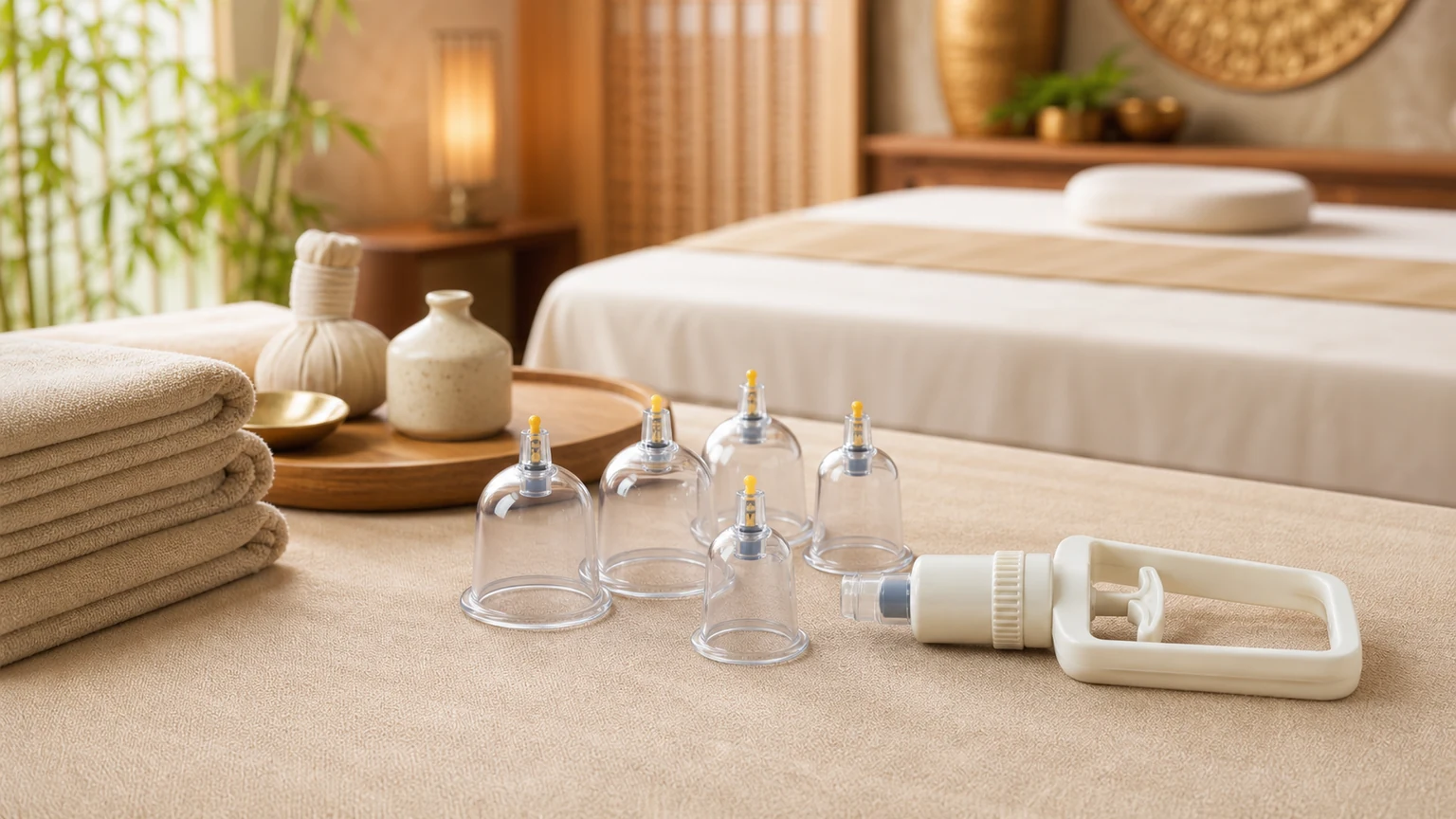
You may be considering cupping but feel uncertain after seeing the circular marks in photographs. Red marks after a cupping massage can be striking, especially across the shoulders or back. They are a recognised response to the cups’ suction, but their colour says far less than many online explanations suggest.
This guide explains why the marks appear, how long they commonly remain visible, and what sensible before and aftercare looks like. It also covers when to postpone treatment and how Cupping & Stretching at NaSiam differs from deep tissue. You can then make a calm, informed choice before booking.
Key points
This summary gives you the essentials before we explore marks and safety decisions in more detail.
- Dry cupping uses suction without breaking the skin.
- Round red or purple areas are a possible skin response; they are not proof of “toxins” or blockages.
- Many marks fade within about one to two weeks, but colour and duration vary between people.
- Protect the area from extra friction and mention skin conditions, medication, and easy bruising beforehand.
- Cupping and deep tissue can both feel intense, but they apply a different mechanical stimulus.
- Massage can support wellbeing but does not replace diagnosis, a doctor, or a physiotherapist.
Contents
- Why does cupping massage leave red marks?
- How long do the marks remain visible?
- Before and aftercare for dry cupping
- When should you postpone cupping?
- Cupping or deep tissue: which is a better fit?
Why does cupping massage leave red marks?
Understanding the technique makes the marks easier to interpret. During dry cupping, air is removed from a cup to create negative pressure, temporarily lifting the skin and superficial tissue.
That pulling force can affect small blood vessels beneath the skin. A pink or red circle may therefore appear immediately, while a stronger response may turn purple or darker later. It can resemble a bruise and feel mildly tender, although the precise tissue process need not be identical to an impact injury.
What the colour does and does not tell you
The colour mainly shows how your skin responded to local suction. It is not a diagnostic test and cannot reliably reveal how much tension is present in a muscle, whether a treatment “worked,” or how many supposed waste products the body released.
That distinction matters because dark circles are sometimes presented as evidence of detoxification or a serious blockage. There is no sound scientific basis for that claim. The NCCIH overview of cupping describes temporary marks as a known side effect while stressing that evidence for many claimed benefits remains limited.
At NaSiam, suction is therefore not increased to produce a darker colour. The appropriate intensity should feel distinct but manageable, suit your skin, and stay within the agreed treatment. More discolouration does not equal a better result.
Dry cupping is not wet cupping
The skin remains intact during dry cupping: there are no cuts and no blood is drawn. Wet cupping, sometimes called hijama, does break the skin and therefore involves different risks and hygiene requirements. NaSiam offers dry cupping only, combined with controlled stretching.
This distinction helps when assessing information online. Wound-care advice after wet cupping, for example, does not apply to an ordinary dry-cupping session. You should nevertheless mention any open area, abrasion, or active irritation on the intended treatment zone before your appointment.
How long do the marks remain visible?
The most practical question is often not whether circles can appear but when they will disappear. No practitioner can promise an exact date because skin type, location, suction, and individual response all differ.
The Cleveland Clinic guide to cupping notes that round red marks should commonly fade within a week or two. Treat that as a general guide, not a guarantee. A faint pink circle may disappear sooner, while a darker mark or sensitive skin may take longer. NCCIH also lists persistent skin discolouration as a possible adverse effect, even though that is not the expected outcome.
Recognising a usual progression
A typical mark gradually becomes less vivid and less tender. Its colour may change while fading, much like other superficial discolouration. There should be no open wound after dry cupping.
Contact a doctor if you develop blisters, a burn, increasing severe pain, pronounced swelling, pus, increasing warmth or redness, fever, or any change that concerns you. If in doubt, have the area assessed before another session.
Plan around visibility
Do you have a wedding, photoshoot, swimming activity, medical appointment, or event involving open clothing? Avoid arranging cupping immediately beforehand. A previous session with little discolouration cannot guarantee that your next skin response will be the same.
Tell a doctor or other healthcare professional that the circular areas came from cupping while they remain visible, so they are not misinterpreted. If you would prefer an option without the possibility of round suction marks, begin with our massage selection guide.
Before and aftercare for dry cupping
Good preparation reduces surprises and helps the practitioner adapt the session appropriately. Aftercare is mainly about comfort, observation, and avoiding extra irritation rather than following elaborate detox rituals.
Before your appointment
Mention your medication and whether you bruise easily, have a bleeding disorder, are pregnant, or recently had surgery. Also discuss allergies, reduced skin sensation, acute injuries, and existing skin problems. If there is medical uncertainty, advice from your doctor may be appropriate first.
Wear clothing that will not rub tightly over the treated area and avoid scheduling hard training or an important event straight after the session. Eat and drink as you normally would; you do not need exceptional amounts of water to “flush out toxins.” For a broader practical overview, read our guide to your first Thai massage.
After your appointment
Treat the area gently for the first few hours. Avoid vigorous scrubbing, strong skincare products, and tight clothing if the skin feels sensitive. A cool compress wrapped in cloth can feel soothing for a short period; do not place ice directly on the skin.
Gentle movement is generally fine when comfortable. Delay intensive training if the treated area feels bruised or tender. Drinking water is of course fine, but follow normal thirst and any medical fluid advice. The marks fade through the skin’s natural recovery, not because you “flush” them away.
When should you postpone cupping?
Cupping is not appropriate for every person or at every moment. A short intake is therefore more than a formality: it identifies skin risks, medication, and recovery context before treatment begins.
Postpone a session if you have an open wound, active skin infection, significant rash, sunburn, fever, or an acute injury on the intended area. Cupping may aggravate eczema or psoriasis, so discuss these conditions with a doctor first. Pregnancy, anticoagulants, a bleeding disorder, markedly reduced sensation, or recent surgery also require prior discussion.
When medical assessment comes first
Unexplained pain, sudden weakness, numbness, breathlessness, chest pain, or symptoms following a serious accident do not belong in a massage decision. Seek appropriate medical assessment instead. Cupping does not mask warning signs and cannot replace diagnosis or rehabilitation.
Research into pain also does not support a simple promise of cure. A systematic review of cupping for chronic pain found limited, heterogeneous studies with risk of bias. Some people report comfort or reduced tension, but that does not make cupping a proven treatment for every condition.
NaSiam therefore keeps the purpose and boundaries practical: a specialised wellbeing session using dry cupping and stretching, adjusted to your feedback. If you are unsure about suitability, discuss it before booking and bring any relevant medical information.
Cupping or deep tissue: which is a better fit?
Both options are often considered when muscles feel tight, but the experience and visible effects are different. Your preference for suction, pressure, stretching, and possible marks matters at least as much as the technique’s name.
| Aspect | Cupping & Stretching | Deep tissue |
|---|---|---|
| Mechanical stimulus | Suction lifts skin and superficial tissue | Slow, targeted pressure addresses deeper tension |
| Sensation | Local pulling followed by stretches | Firm pressure without cups |
| Marks | Round red or purple areas are possible | No typical circular suction marks |
| Oil | The cupping and stretching session is oil-free | Can vary by approach and area |
| Often suits | People open to cups, marks, and controlled stretching | People who prefer targeted manual pressure |
Read the deep tissue service page if you primarily want slow, deeper pressure, or explore our article on deep tissue for tight muscles for more context. A gentler massage is often more logical if you are very pressure- or skin-sensitive or do not want visible marks.
Price is not the best way to compare techniques, but it is part of a practical decision. The current price list shows available durations and fees. You can then decide with the practitioner what is realistic and appropriate; a more intensive technique is not automatically a better one.
Choose cupping massage with clear expectations
Would you like to combine dry cupping with controlled stretching and understand that temporary circles may appear? Review the method, duration, and precautions on our Cupping & Stretching massage page. Mention skin sensitivity, medication, and other relevant considerations when enquiring so NaSiam can assess whether the session is a suitable fit.
Frequently asked questions about cupping massage and red marks
These concise answers cover the practical questions that matter most before a first cupping session.
Why do red marks appear after a cupping massage?
Suction temporarily lifts the skin and superficial blood vessels. This can create a round red, purple, or darker area. Its colour does not prove that toxins were removed and does not reliably measure the severity of muscle tension.
How long do cupping marks remain visible?
Many marks gradually fade within about one to two weeks, but there is no fixed timeline. Intensity, location, skin response, and individual sensitivity all matter. Discolouration can sometimes last longer.
Should red circles after cupping hurt?
Mild tenderness, tightness, or a bruised feeling can occur. Severe or increasing pain, blisters, pronounced swelling, warmth, or signs of infection are not expected and should be assessed by a doctor.
Can you exercise after a cupping massage?
Gentle movement can usually feel comfortable. Delay hard training when the treated area is tender and build up again only when it feels comfortable. Discuss a competition or intense session beforehand.
Can you have cupping while taking blood thinners?
Always mention anticoagulant medicines and easy bruising in advance. Because visible discolouration or bleeding may be more likely, it is sensible to discuss cupping with your doctor and practitioner first.
What is the difference between cupping and deep tissue massage?
Cupping uses suction to lift the skin and may leave round marks. Deep tissue uses slow, targeted pressure with hands or forearms and does not usually leave circular suction marks.
Is dry cupping the same as wet cupping or hijama?
No. Dry cupping leaves the skin intact. Wet cupping or hijama breaks the skin. NaSiam uses dry cupping and does not provide wet cupping.
Therapeutic, with clear boundaries
Our massages are non-medical wellbeing treatments adapted to tension, stiffness, fatigue, and the need for relaxation.
- We start with a short intake and adjust pressure, pace, and techniques to your comfort level and situation.
- Massage may support relaxation and temporary body comfort; it does not diagnose conditions or replace a doctor, physiotherapist, or rehabilitation.
- Always mention pregnancy, recent surgery, fever or infection, acute injury or inflammation, skin wounds, blood thinners or a bleeding disorder, and unexplained or increasing pain beforehand.
- Firm massage, deep tissue, and cupping require extra caution; cupping can cause temporary discoloration, scars, burns, or infections.
- Seek medical help for severe or rapidly increasing pain, numbness or weakness, clear swelling, chest pain, or breathing difficulty; do not wait for a massage appointment.
Sources for boundaries and precautions: NCCIH on massage safety, NCCIH on cupping, and ACOG on massage during pregnancy.