
Massage for Back, Neck, and Shoulders: What to Expect
Short answer
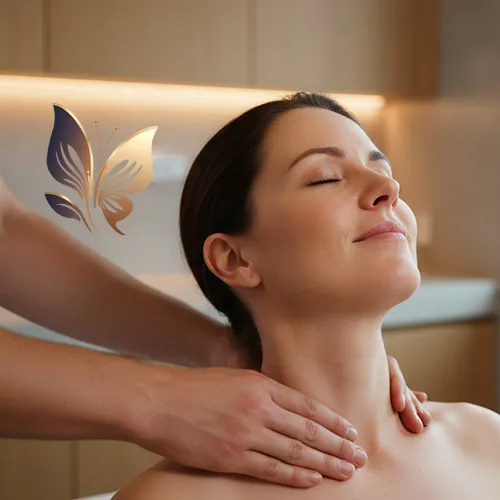
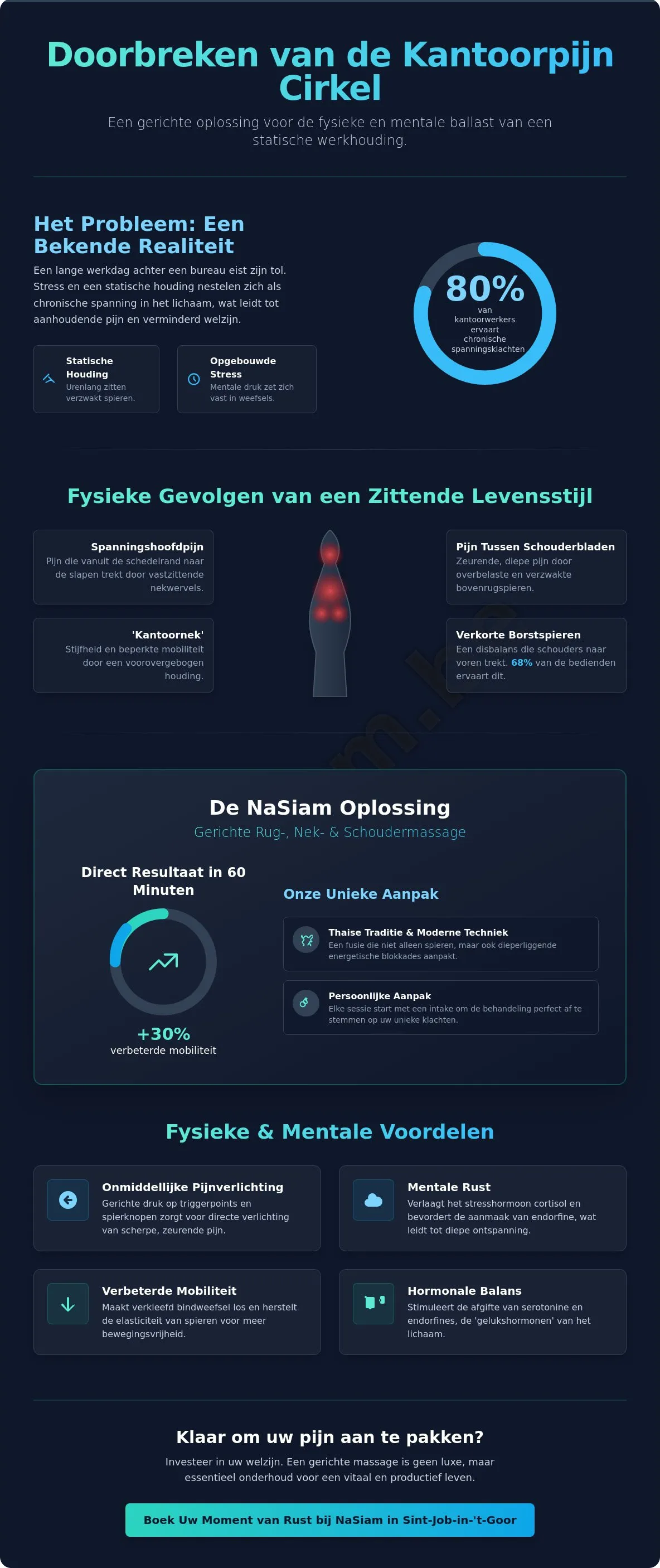
A back, neck, and shoulder massage may help tense muscles feel looser for a while, provide a moment of rest, and make movement feel more comfortable. People often choose a focused session after desk work, driving, exercise, or a stressful period. Results vary, and massage does not automatically address the cause of pain.
Massage may be a suitable wellness choice for ordinary muscle fatigue or stiffness. If you have a recent injury, increasing or unexplained pain, weakness, pins and needles, or pain radiating into an arm or leg, an assessment by a doctor or physiotherapist should come first.
Key points
- Back, neck, and shoulder complaints can have several overlapping causes.
- Massage may offer short-term relaxation and less perceived muscle tension, but it is not a diagnosis or cure.
- Pressure and stretching should be adapted to your comfort and health.
- A focused session suits tension that is mainly in the upper body; a full-body massage has a different purpose.
- Sharp pain, numbness, weakness, or a marked loss of movement calls for extra caution.
- Current session and booking information belongs on our back, neck, and shoulder massage service page; this article provides the educational context.
Why do the back, neck, and shoulders often feel tense?
Holding one position for a long time, repeated movements, physical load, and stress may all contribute to a tired or tight feeling. This does not always mean tissue damage. Muscles also respond to sleep, recovery, general activity, and how demanding an activity is for you at that moment.
Desk work and prolonged sitting
During computer work, the head, arms, and upper body often remain in roughly the same position. The issue is not one supposedly perfect or incorrect posture, but mainly a lack of variation. Changing position regularly, taking short movement breaks, and arranging your workstation practically can help spread the load.
Stress and unconscious muscle tension
Some people unconsciously raise their shoulders or clench their jaw during busy periods. Massage may create a pause and make you more aware of that tension. It does not remove the source of ongoing stress.
Exercise, lifting, and repeated load
A new workout, gardening, long drives, or repeated overhead work can leave muscles temporarily fatigued. Keeping gently active and building load gradually is often more important than one intense treatment. A fall, sudden weakness, swelling, or severe pain should be assessed before massage.
A complaint is not always just a muscle knot
Pain around the neck, shoulder, or back can also involve a joint, nerve, tendon, or another medical cause. A massage practitioner can notice tension and adapt the session but does not make a medical diagnosis. Our guide to the difference between Thai massage and physiotherapy explains that boundary in more detail.
What can massage realistically do?
The most realistic goals are relaxation, temporarily reduced perceived tension, and more comfortable movement. Research does not support firm promises. The US NCCIH describes possible short-term benefits for neck and shoulder pain while stressing that results and certainty vary. A current Cochrane review on neck pain found little to no difference compared with placebo massage for persistent neck pain and rated the evidence as low certainty.
For low-back pain, Cochrane reports possible short-term improvements, but the evidence was also low to very low quality. We therefore deliberately use terms such as may and temporary. Massage does not replace medical treatment, exercise therapy, or a rehabilitation plan when those are needed.
Neck and shoulder massage
A neck and shoulder massage usually works around the upper back, shoulder blades, shoulders, and muscles beside the neck. Pressure may be calm and flowing or gradually become more focused. Applying hard pressure directly to the cervical vertebrae is not part of the treatment.
For tension associated with desk work or stress, some people enjoy a combination of warmth, gentle strokes, and measured pressure. An intense sensation is not necessarily more effective. If pain travels into your arm, your hand feels cold or numb, or you have reduced strength, the NHS guidance on neck pain advises seeking medical help.
Thai massage for shoulder tension
Thai techniques may combine rhythmic pressure, supported movement, and gentle stretching. Work around the shoulder can also include the upper back and muscles around the shoulder blade rather than only the sensitive spot. Movement stays within a comfortable range; the shoulder is not forced to achieve a larger range.
Massage may suit a tired or tight feeling, but not every type of shoulder pain is a massage complaint. A shoulder that looks different after an injury, swells rapidly, feels red or hot, or can barely move needs medical assessment first. Persistent pain and stiffness may require a different approach from ordinary muscle tension.
Massage for back tension
A back massage may focus on the upper back, the area around the shoulder blades, and, where appropriate, the lower back. Calm pressure and movement can feel pleasant after prolonged sitting or general muscle load. Claims about flushing out toxins, repositioning vertebrae, or curing chronic back pain are not supported.
Back pain that starts after major trauma or occurs with fever, new weakness in the legs, numbness around the buttocks or genitals, or a change in bladder or bowel control needs urgent medical care. Massage is not the first step in those situations.
Which massage techniques may be used?
Gentle oil massage
Flowing strokes and kneading with oil suit people who mainly want to relax or find firm pressure uncomfortable. Intensity can be adapted throughout the session.
Focused pressure and deep-tissue techniques
Slow, measured pressure may be used around areas that feel tense. deep tissue does not mean the treatment should be maximally forceful. See our separate deep-tissue massage if you are considering that approach.
Thai pressure and supported stretching
Traditional Thai elements combine pressure with supported movements. Not every stretch is suitable for every person. The approach is adjusted or postponed in cases such as hypermobility, osteoporosis, recent injury, or recent surgery.
Heat or additional techniques
Heat may feel soothing and can be chosen through a hot-stone massage. Cupping and stretching is a separate treatment and is not a required addition for a good result. We discuss beforehand what fits your goal and health.
Focused massage or full-body massage?
A focused massage makes sense when your attention is mainly on the back, neck, and shoulders and you want to spend the available time calmly addressing those areas. A full-body massage divides time across more areas and better suits general relaxation.
The choice does not need to rely on self-diagnosis. During the intake, you can describe where you feel tension, which movements are sensitive, and what you expect from the session. Current duration, price, and booking options are available on the back, neck, and shoulder massage at NaSiam service page.
What can you expect at NaSiam in Sint-Job-in-’t-Goor?
Beforehand: a brief intake
We discuss where you feel tension, how long it has been present, and whether an injury, surgery, pregnancy, medication, or medical diagnosis is relevant. Also mention pins and needles, radiating pain, unexplained swelling, and previous unpleasant reactions to massage.
During the session
The treatment is built up gradually. You may ask for less pressure, a different position, or for an area to be skipped at any time. Sensitivity does not automatically mean harm, but sharp, electric, or increasing pain is a reason to stop immediately.
Depending on the chosen massage, treatment takes place over clothing or with oil on the skin. You are covered discreetly and never need to undress beyond what feels comfortable.
After the massage
You may feel relaxed or temporarily tender. Take your time standing up and return to normal movement within your comfort. Drinking extra water is fine if you are thirsty, but it is not needed to flush out supposed toxins. Contact a healthcare professional if you develop severe or increasing pain, clear swelling, numbness, or other concerning symptoms.
When should medical assessment come first?
Postpone massage and seek appropriate medical advice if you have, among other things:
- a recent accident, fall, surgery, or suspected fracture;
- severe, rapidly increasing, or unexplained pain;
- fever, infection, a red or hot swelling, or an open wound;
- new numbness, pins and needles, weakness, or coordination problems;
- pain clearly radiating into an arm or leg;
- severe osteoporosis, a bleeding risk, or possible thrombosis;
- changes in bladder or bowel control or numbness around the buttocks;
- uncertainty about whether massage is safe with your condition or treatment.
Massage should not delay necessary diagnosis. If you are pregnant, do not automatically choose a regular back massage; discuss the adapted pregnancy massage.
What can you do between sessions?
- Alternate sitting, standing, and moving regularly.
- Take short, manageable movement breaks instead of holding one perfect posture for a long time.
- Build exercise and physical load gradually.
- Use gentle movements that remain comfortable; do not force a neck or shoulder stretch.
- Follow exercises from your doctor or physiotherapist if you were given them.
- Have persistent or worsening symptoms assessed instead of repeatedly using stronger massage.
Self-massage with your hands or a ball may feel mildly and temporarily pleasant. Avoid hard pressure on the front or side of the neck and stop if you experience pins and needles, dizziness, or radiating pain.
How often is massage useful?
There is no fixed schedule that works for everyone. Some people book one session after a demanding period; others plan an occasional maintenance visit when tension returns. After each session, assess how you respond and whether the realistic goal is being met.
More sessions are not automatically better. If relief is brief and the complaint quickly returns, it makes sense to consider daily load, movement, and possible medical guidance as well.
Frequently asked questions
Which massage is best for the neck and shoulders?
That depends on your goal and sensitivity. A gentle oil massage often suits relaxation; focused pressure or Thai techniques may suit people who enjoy a more local approach. Pressure does not have to be hard to be worthwhile.
Can Thai massage help shoulder pain?
Thai massage may temporarily reduce perceived muscle tension and make movement feel more comfortable for some people. It does not cure a tendon injury, frozen shoulder, nerve problem, or joint disorder. Clear restriction of movement, weakness, or persistent pain should be assessed by a healthcare professional first.
Does massage help neck pain from desk work?
Massage may provide a temporary pause. Variation in posture, movement breaks, sleep, recovery, and a workable desk setup remain important when the load returns every day.
Is massage painful when i have muscle knots?
It may feel sensitive, but it does not need to be painful. Avoid treating good pain as a goal in itself. You should be able to breathe calmly, and pressure should be adjusted immediately if pain is sharp or radiating.
Can massage help tension headaches?
Some people report relief when neck and shoulder tension contributes, but research on massage for headaches remains uncertain. A new, sudden, or exceptionally severe headache needs medical assessment.
Should i book a focused session or a full-body massage?
Choose a focused session if you mainly want time spent on the back, neck, and shoulders. Choose a full-body massage when general relaxation is the priority. The service page has more information about our focused back, neck, and shoulder massage in Sint-Job-in-’t-Goor.
NaSiam is located in Sint-Job-in-’t-Goor and is accessible from places including Brecht, Brasschaat, and Schilde. Before your visit, see our information about access and parking.

Author, reviewer and approver
Nalita Mangtaku
Thai massage therapist, owner & founder
Nalita Mangtaku has practised massage since 2009 and is the founder of NaSiam. Her favourite treatments are therapeutic Thai massage, sports massage, and relaxation massage. She describes her style as flowing, healing, and energetic.
Therapeutic, with clear boundaries
Our massages are non-medical wellbeing treatments adapted to tension, stiffness, fatigue, and the need for relaxation.
- We start with a short intake and adjust pressure, pace, and techniques to your comfort level and situation.
- Massage may support relaxation and temporary body comfort; it does not diagnose conditions or replace a doctor, physiotherapist, or rehabilitation.
- Always mention pregnancy, recent surgery, fever or infection, acute injury or inflammation, skin wounds, blood thinners or a bleeding disorder, and unexplained or increasing pain beforehand.
- Firm massage, deep tissue, and cupping require extra caution; cupping can cause temporary discoloration, scars, burns, or infections.
- Seek medical help for severe or rapidly increasing pain, numbness or weakness, clear swelling, chest pain, or breathing difficulty; do not wait for a massage appointment.
Sources for boundaries and precautions: NCCIH on massage safety, NCCIH on cupping, and ACOG on massage during pregnancy.
- Massage
- Health
- Wellness